Smart Lockdown in Pakistan 2026 Fact Check
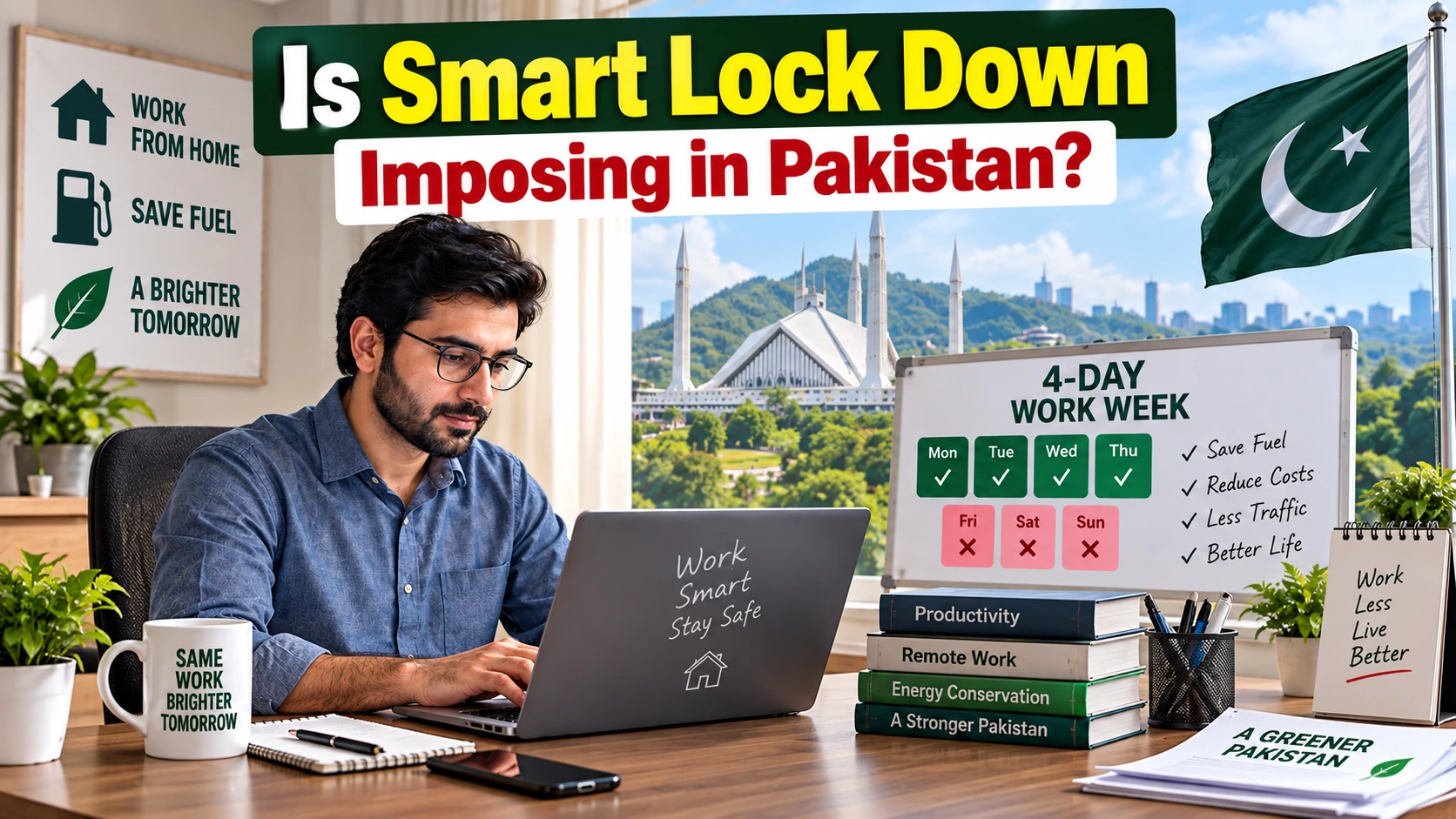
Pakistan is once again in the headlines for a “smart lockdown”, but this time, the trigger is not a pandemic. It’s the country’s worsening fuel crisis. As petrol and diesel prices continue to climb, the Federal Government is actively considering a nationwide four-day work week, known by several officials and media outlets as a “smart petroleum lockdown,” aimed at cutting fuel consumption and reducing national expenditure.
Still it is not confirm by Government whether Smart Lock Down will Impose?
What Is Pakistan’s “Smart Lockdown” All About?
“Smart Lockdown” refers to a targeted, selective strategy, shorter working weeks, reduced office hours, and limited fuel use for government vehicles, rather than a blanket shutdown of businesses or movement. The goal is to conserve fuel and electricity without halting economic activity altogether.
According to sources, the decision was recorded in the minutes of a high-level government meeting held on September 14, 2026, where officials discussed the sharp rise in petroleum prices and its impact on the national budget. While an official notification has not yet been issued as of this writing, multiple media reports indicate the plan is well advanced and could be formalized soon.

Purpose of Smart Lock Down
The driving force behind this decision is the continuous surge in fuel prices, largely linked to global oil market volatility. International oil markets have remained under pressure due to disruptions in Middle Eastern energy supplies, with Brent crude climbing above the $100-per-barrel mark during recent bouts of instability. Domestically, this has translated into repeated price hikes at the pump, squeezing both government budgets and household finances.
To manage the fallout, Islamabad has been rolling out a series of austerity measures throughout 2026, including:
- Reduced fuel allocation for government vehicles
- Salary cuts and voluntary pay contributions from senior officials and cabinet members
- A ban on non-essential government purchases (vehicles, furniture, air conditioners)
- Restrictions on foreign trips for officials unless deemed essential
- Work-from-home arrangements for a portion of public and private sector employees
The proposed four-day work week is being viewed as the next step in this broader energy-saving strategy.
Proposed 4-Day Work Week Plan
Under the plan reportedly being finalized, public and private offices, along with schools, colleges, and universities across the country, would operate for four days a week instead of the usual five or six, with three days off. The intention is to cut down on commuting, reduce transport costs, and ease the burden of rising operational expenses on both institutions and employees.
Some reports suggest a hybrid model may be adopted, where certain employees attend offices on designated days while others work from home, with the specific arrangements left to individual departments to finalize.
How Business Communities Are Reacting
Pakistan’s trading and business community has largely welcomed the idea of a smart lockdown, though with caveats. Karachi-based trade bodies, including the Sindh Tajir Ittehad, have publicly endorsed limiting business and office hours in phases as a way to conserve fuel and electricity, arguing it would also help ease urban traffic congestion. At the same time, traders have demanded a reversal of the latest fuel price hikes, warning that continued increases risk pushing commercial activity into stagnation.
Effect on Public
For ordinary citizens, a nationwide smart lockdown or four-day work week would primarily mean adjusted school and office schedules rather than restricted movement. Officials have repeatedly stressed that essential services, including healthcare, emergency response, and public transport will not be affected. In fact, some regions saw temporary relief measures earlier in 2026, such as free public transport for a limited period, aimed at cushioning citizens from the broader fuel crunch.
Conclusion
While no formal, nationwide notification had been issued at the time of writing, all signs point to Pakistan moving further toward reduced working days and tighter fuel conservation measures as petroleum prices keep climbing. Whether this “smart lockdown” becomes a lasting fixture of Pakistan’s economic policy or a temporary emergency measure will likely depend on how global oil markets, and the broader regional situation evolve in the coming months.
Okay Chak 55 d